Top Causes of Core Samples Breaking Inside the Barrel?

Time:2026-09-16 Author:Aria
0%

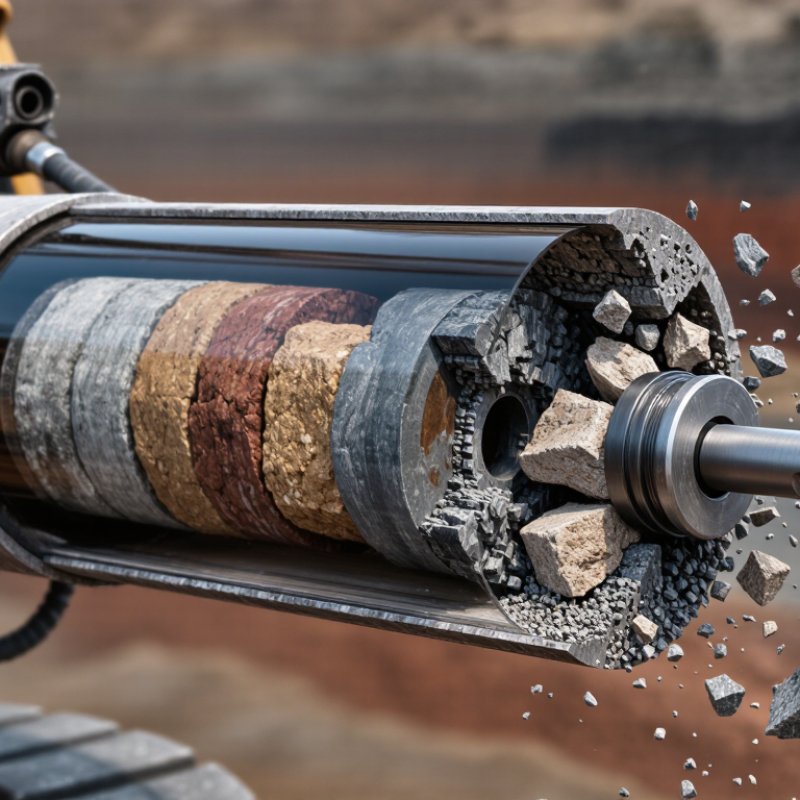
Why are my core samples breaking inside the barrel? This question usually begins with a damaged core tray, scattered fragments, and a recovery record that suddenly looks worse. The cause is rarely one mistake. Excessive feed pressure can crush weak zones. Excessive rotation can grind competent rock into chips. A worn bit may also create heat, vibration, and uneven cutting.

Dr. John A. Hudson, a respected rock-mechanics specialist, offers a useful reminder: “Good drilling decisions begin with understanding how the rock will fail.” That principle matters inside every core barrel. Fractured shale, clay-rich seams, and highly weathered granite may break before reaching the surface. Poor water circulation can worsen the damage by leaving cuttings around the bit. A damaged core lifter can then split an otherwise sound run during extraction.

Small details matter.

Check the drilling log beside the broken pieces. Are breaks smooth, angular, or polished? Smooth breaks may suggest natural joints. Fresh, crushed edges often indicate mechanical damage. Compare feed pressure, rotation speed, flushing volume, bit wear, and run length. The barrel design may also be unsuitable for the formation.

Some explanations will remain uncertain. That is normal. A short trial run with gentler pressure may reveal more than a long argument. Reliable diagnosis comes from matching the fracture pattern with machine settings and geological conditions. When recovery improves, record the change. Good field evidence is more trustworthy than assumption.
Top Causes of Core Samples Breaking Inside the Barrel?

Core Sample Breakage: Definition and Main Failure Patterns

Core sample breakage is the loss of sample continuity during drilling, retrieval, or handling. It can appear as small chips, separated blocks, or completely crushed material. The damage may reflect the rock itself, the drilling process, or both. In practice, the distinction is not always clean. A weak bedding plane can fail naturally, then suffer further damage during lifting.

Several failure patterns are common. Transverse breaks cut across the core and often follow bedding, foliation, or existing joints. Longitudinal splitting runs along the core axis, sometimes indicating directional weakness or uneven drilling pressure. Rubble zones contain many short fragments with poor recovery quality. Grinding creates rounded chips and fine powder, which may suggest excessive rotation, poor flushing, or repeated contact inside the barrel. Wedging can leave sharp, fresh breaks near the core shoe or catcher.

Careful logging should record fracture surfaces, fragment size, moisture, and the location of every damaged interval. Fresh, rough surfaces may indicate mechanical failure, while stained or weathered surfaces can represent natural discontinuities. A simple photograph beside a scale helps preserve evidence before handling changes the pattern. Recovery percentages alone can mislead. I have seen apparently poor recovery caused by careless transfer rather than unstable ground. Likewise, a competent-looking section may hide narrow fractures that open during extraction. The diagnosis remains uncertain when drilling records, core condition, and geological structures do not agree.

Rock Properties That Increase the Risk of Core Breakage

Top Causes of Core Samples Breaking Inside the Barrel?

Rock properties often decide whether a core survives inside the barrel. Low tensile strength is the hidden weakness. In many intact rocks, tensile strength is only about 5–10% of unconfined compressive strength. A small bending force can then open a hairline crack. The International Society for Rock Mechanics links this behavior to tensile testing and point-load evaluation. Bedding, foliation, schistosity, and clay-filled seams create weak planes. If those planes run across the core, the sample may break into short discs. Water can worsen the problem, especially in weathered rock or swelling clay zones.

Fracture frequency also matters. Deere’s original Rock Quality Designation classification rates 25–50% RQD as poor and below 25% as very poor. Such rock commonly enters the barrel already divided. However, RQD alone does not explain every break. Grain size, mineral bonding, porosity, weathering, and brittleness must be logged together. ASTM D2113/D2113M emphasizes careful core recovery and sample handling during rock investigations. Field teams should record fracture angles, infill, moisture, and broken-piece shape before changing drilling settings. A point-load index can help compare zones, but it is not a complete breakage forecast. That shortcut can mislead. One practical mistake remains common: blaming drilling speed before mapping natural defects. Personally, I would question any interpretation based on one test result. Rock is rarely uniform across a single barrel.

Drilling and Bit-Related Causes of Fractured Core Samples

Top Causes of Core Samples Breaking Inside the Barrel?

Fractured core often begins at the bit, not inside the barrel. A worn bit can rub instead of cutting, creating heat, vibration, and uneven stress. Excessive weight on bit crushes weak bands and opens natural joints. Insufficient weight can also cause bit chatter. That intermittent contact produces repeated impact loads. Small fragments then enter the core barrel and grind against the remaining core. Cooling failure makes this worse. Blocked water passages reduce flushing and raise the temperature around the cutting face.

Bit selection must match rock strength, abrasiveness, and fracture condition. A hard formation needs controlled cutting, while soft or broken ground may require a different cutting structure. The U.S. Army Corps of Engineers’ EM 1110-2-2906 stresses stable drilling parameters, adequate circulation, and careful core handling. ASTM D2113/D2113M also requires recording drilling conditions and recovery details. These records matter when diagnosing breakage. The ISRM’s widely used RQD method counts sound pieces longer than 100 millimetres, so a few crushed sections can sharply reduce the reported value. There is no universal breakage percentage in professional guidance. That limitation deserves attention. Field teams sometimes blame the geology too quickly, although unstable rotation, poor flushing, or an overloaded bit may be the real cause. A short trial run, followed by checking torque, water return, and fragment shape, can reveal more than a visual inspection alone.

Top Causes of Core Samples Breaking Inside the Barrel? - Drilling and Bit-Related Causes of Fractured Core Samples

No. Cause How It Fractures the Core Typical Field Indicators Most Affected Core or Formation Recommended Control Priority
1 Excessive bit rotation speed High rotational speed increases frictional heat, vibration, and torsional stress at the cutting face. These forces can initiate cracks and enlarge existing natural fractures. Core arrives as short angular pieces; elevated torque or vibration; rapid bit wear; darkened or glazed cuttings. Hard, abrasive, laminated, or highly fractured rock. Reduce rotation in accordance with the bit and formation response; maintain adequate cooling and monitor torque. High
2 Excessive weight on bit Excessive axial load crushes weak grains and forces the bit into discontinuities. The resulting compressive and bending stresses can split the core before it enters the barrel. High penetration rate followed by sudden reduction; crushed core ends; unstable pump pressure or torque. Weak sedimentary rock, weathered rock, shale, and broken zones. Use a controlled feed rate and avoid sudden increases in axial load; correlate weight, torque, and penetration response. High
3 Improper drilling parameters An unbalanced combination of rotation speed, weight on bit, flow rate, and penetration rate creates unstable cutting conditions and repeated impact loading. Fluctuating torque; irregular penetration; cyclic vibration; inconsistent core recovery from otherwise similar intervals. Mixed lithology, alternating hard and soft layers, and variable-strength formations. Adjust one parameter at a time and record the response; use stable, formation-specific operating settings. Medium–High
4 Bit wear or incorrect bit selection A worn or unsuitable cutting structure may rub instead of cut, increasing vibration and heat. An overly aggressive bit can also catch weak planes and break the core. Reduced penetration; polished or rounded cutting elements; increased torque; poor recovery after a lithology change. Abrasive hard rock, soft formations, interbedded formations, and fractured rock. Select the cutting structure for the formation; inspect bit wear regularly and replace it before severe undercutting or glazing develops. High
5 Insufficient drilling-fluid circulation Inadequate flow fails to remove cuttings and cool the bit. Cuttings can be recut against the core, while heat and friction weaken the core surface. Rising fluid temperature; poor returns; blocked or restricted flow; increased pressure; abrasive debris in the return stream. Deep holes, fractured formations, clay-rich zones, and high-solids drilling environments. Maintain clean circulation paths, verify pump performance, control fluid properties, and prevent annular blockage. High
6 Bit clogging or face loading Clay, soft rock, or compacted cuttings clog the waterways and cutting face. The bit then rubs and pulses against the formation, producing mechanical and thermal damage. Drop in flow efficiency; pressure increase; intermittent torque; sticky or smeared cuttings; sudden loss of penetration. Claystone, shale, marl, soft limestone, and unconsolidated material. Use suitable fluid properties and bit waterways; pause to clean the face when loading is indicated; avoid excessive weight on bit. Medium–High
7 Bit vibration, whirling, or bounce Lateral or axial oscillation repeatedly impacts the core. Resonance in the drill string or poor stabilization can create transverse breaks and finely fragmented sections. Visible machine vibration; rhythmic torque variation; irregular noise; periodic changes in penetration rate. Large-diameter holes, hard formations, deviated holes, and variable-strength rock. Stabilize the drill string, check alignment and bearing condition, and adjust rotation and weight to move away from unstable operating conditions. High
8 Drill-string misalignment or worn components Bent rods, worn couplings, damaged stabilizers, or excessive clearance allow the string to whip and transmit bending loads to the bit and core barrel. Uneven rod wear; abnormal vibration; inconsistent hole deviation; damaged threads or evidence of contact wear. Long holes, deviated holes, and operations with heavily worn rod strings. Inspect rods, couplings, stabilizers, and bearings; remove bent components and maintain correct alignment. High
9 Core barrel overfilling When the inner tube is full, additional core has nowhere to move. Continued drilling compresses and buckles the core, causing breaks inside the barrel. Recovery declines near the end of a run; crushed or jammed core; increased drilling resistance; difficult barrel retrieval. Competent, high-recovery formations and runs that exceed the effective core capacity. Set run lengths according to core quality and barrel capacity; stop drilling when the core-blocking signal or resistance indicates a full tube. Medium–High
10 Core lifter or catcher interference A damaged, incorrectly sized, or poorly positioned core lifter can grip the core unevenly. Retrieval then applies concentrated tensile and shear forces that break the sample. Grooves or gouges at the core end; broken pieces at the lifter; difficulty releasing the core; abnormal drag during retrieval. Fractured, weak, broken, or undersized core. Use the correct lifter size and type; inspect spring tension, edges, seating, and wear before each run. Medium–High
11 Natural joints, bedding, and foliation Pre-existing discontinuities provide planes of weakness. Normal drilling forces can open or extend these planes, producing breaks that may be mistaken for equipment damage. Breaks follow consistent angles or planar surfaces; matching surfaces; loss of recovery in structurally broken intervals. Jointed rock, foliated metamorphic rock, bedded sedimentary rock, and fault zones. Reduce vibration and excessive axial load; use an appropriate core barrel and document natural discontinuities separately from mechanical breaks. Medium
12 Insufficient stabilization in broken ground Loose fragments are not adequately supported by the inner tube or core-recovery system. Movement inside the barrel allows pieces to collide, abrade, and break during drilling or lifting. Highly variable piece sizes; voids in the core; repeated loss of small fragments; poor recovery despite stable machine readings. Fault gouge, breccia, weathered rock, cavernous zones, and intensely jointed formations. Use a core barrel and recovery assembly suited to broken ground; shorten runs and control lifting speed and vibration. Medium–High
Field interpretation note: A fractured core may result from natural geological discontinuities, drilling energy, or handling inside the barrel. Compare break surfaces, drilling records, torque and penetration trends, bit condition, circulation performance, and core-barrel inspection results before assigning the primary cause.

Barrel, Fluid, and Handling Factors Behind Sample Damage

Core samples rarely break for one reason. The barrel is often the first suspect, but fluid and handling conditions can amplify small weaknesses. A worn core barrel may create uneven clearance, side loading, or vibration. A damaged core lifter can grip the sample too aggressively. Poor alignment also leaves fresh fractures near the bit.

International Ocean Discovery Program expedition reports often record more than 90% recovery in competent formations. Fractured intervals may fall below 60%. These figures are not universal, but they reveal a pattern. Barrel stability matters. Fluid properties matter too. Excessive viscosity can restrict circulation and trap cuttings. Low viscosity may fail to suspend debris. High differential pressure can wash or split weak cores. The IADC Drilling Manual and API fluid-testing guidance both stress measured rheology, solids control, and pressure monitoring.

Handling damage begins during retrieval. Fast hoisting can impose shock loads on a wet, fragile core. Repeated rotation may turn a partly intact sample into fragments. Field teams should support the barrel, keep the core oriented, and avoid sudden temperature changes. Drying is another overlooked risk. Some clay-rich samples shrink visibly within minutes. I have seen perfect-looking runs crumble after careless extraction. That observation deserves caution, not confidence. Recovery percentage alone cannot prove sample quality. Record fracture condition, fluid density, pull speed, vibration, and barrel wear for every run.

Methods for Preventing Core Breakage During Drilling and Recovery

Top Causes of Core Samples Breaking Inside the Barrel?

Core breakage often begins with vibration, excessive feed pressure, or an unsuitable drilling speed. Weak bedding planes can split under small changes in force. Fractured rock may also collapse when water pressure changes inside the hole. A dull bit creates heat and irregular cutting, while poor alignment causes the barrel to rub against the borehole wall. Sometimes, the core was already broken before recovery.

Preventing breakage requires steady control rather than maximum drilling power. Match rotation speed and feed pressure to the rock’s strength and fracture pattern. Use enough flushing fluid to remove cuttings without washing away fragile material. Check the core barrel, locking parts, and inner tube before each run. A damaged component can turn a stable operation into a costly failure. Keep the drill string aligned, especially in deviated holes. Small adjustments matter.

Recovery needs patience. Reduce pulling speed near the surface and avoid sudden impacts on the barrel. Use a suitable core lifter that grips without crushing weak sections. Place the core gently into a padded tray and keep it in its natural orientation. Photograph loose fragments before handling them. In practice, the perfect setting is rarely obvious. I have seen experienced crews increase pressure when recovery slowed, only to create more breakage. Recording each run helps reveal that mistake and guides better settings on the next attempt.

FAQS

What is core sample breakage?

It is the loss of continuity during drilling, retrieval, or handling. Small chips, separated blocks, or crushed material may result.

What are common core breakage patterns?

Transverse breaks cross the core, often along bedding or joints. Longitudinal splits follow the core axis. Rubble zones contain many short fragments. Grinding produces rounded chips and fine powder.

How can natural fractures be distinguished from drilling damage?

Fresh, rough surfaces may indicate mechanical failure. Stained or weathered surfaces may represent older geological discontinuities. The difference is not always clear. Compare fracture surfaces with drilling records and nearby structures.

Why can recovery percentages give a misleading impression?

Poor recovery may result from careless transfer, not unstable ground. A strong-looking section may hide narrow fractures opening during extraction. Recovery numbers alone are insufficient.

How do barrel conditions contribute to breakage?

A worn barrel can create uneven clearance, vibration, or side loading. A damaged core lifter may grip weak material too aggressively. Poor alignment can leave fresh breaks near the cutting area.

How do drilling fluids affect fragile cores?

Excessive viscosity can restrict circulation and trap cuttings. Low viscosity may fail to suspend debris. High pressure can wash or split weak material. Measured fluid properties and pressure records are important.

Which drilling conditions commonly cause core damage?

Excessive vibration, feed pressure, or unsuitable rotation speed can initiate breaks. A dull bit may create heat and irregular cutting. Poor alignment can make the barrel rub against the borehole wall.

How can teams reduce breakage during retrieval?

Slow the pull near the surface and avoid sudden impacts. Support the barrel carefully. Keep the core oriented in a padded tray. Use a lifter that grips without crushing weak sections.

What should be recorded after each drilling run?

Record fragment size, moisture, fracture condition, and damaged intervals. Also note pull speed, vibration, fluid density, and barrel wear. Photograph loose fragments beside a scale. Small details matter.

What is the most reliable way to diagnose breakage?

Compare core condition, drilling settings, equipment condition, and geological structures. No single clue proves the cause. The diagnosis may remain uncertain.

Conclusion

Core sample breakage occurs when the recovered rock arrives in short, crushed, or highly fragmented pieces instead of a continuous cylindrical sample. Common failure patterns include splitting along natural fractures, snapping across weak layers, and grinding caused by vibration or excessive rotation. Rock properties such as intense jointing, weathering, bedding, clay-rich zones, low strength, and internal stress can make a formation especially vulnerable. If you are asking, “why are my core samples breaking inside the barrel,” the cause may involve more than the rock itself.

Drilling conditions and equipment settings are also important. Excessive weight on bit, unstable rotation, poor bit selection, inadequate flushing, and an unsuitable drilling speed can create damaging vibration and hydraulic pressure. A worn or improperly assembled core barrel may allow the core to rub, twist, or become unsupported. Careful control of drilling parameters, correct fluid flow, gentle recovery, proper barrel maintenance, and secure handling can significantly reduce breakage. Recording fracture zones and adjusting techniques as conditions change helps preserve sample quality and improve geological interpretation.

Aria

Aria

Aria is a dedicated marketing professional with a deep passion for innovative strategies and a keen understanding of our company's product offerings. With a wealth of experience in the industry, Aria excels at crafting engaging content that highlights the unique features and benefits of our......