In the realm of hard rock drilling, core recovery rates are critical. The ability to extract quality core samples directly influences the effectiveness of mineral exploration. Many professionals face challenges that hinder optimal recovery. Understanding how to improve core recovery rates in hard rock is essential for geologists and drilling operators alike.
Various factors contribute to core recovery discrepancies. Drilling techniques, equipment quality, and operator experience all play vital roles. Inadequate drilling parameters can lead to core loss. Therefore, adjusting these parameters is key to enhancing performance. Implementing targeted strategies can yield significant improvements in core recovery rates.
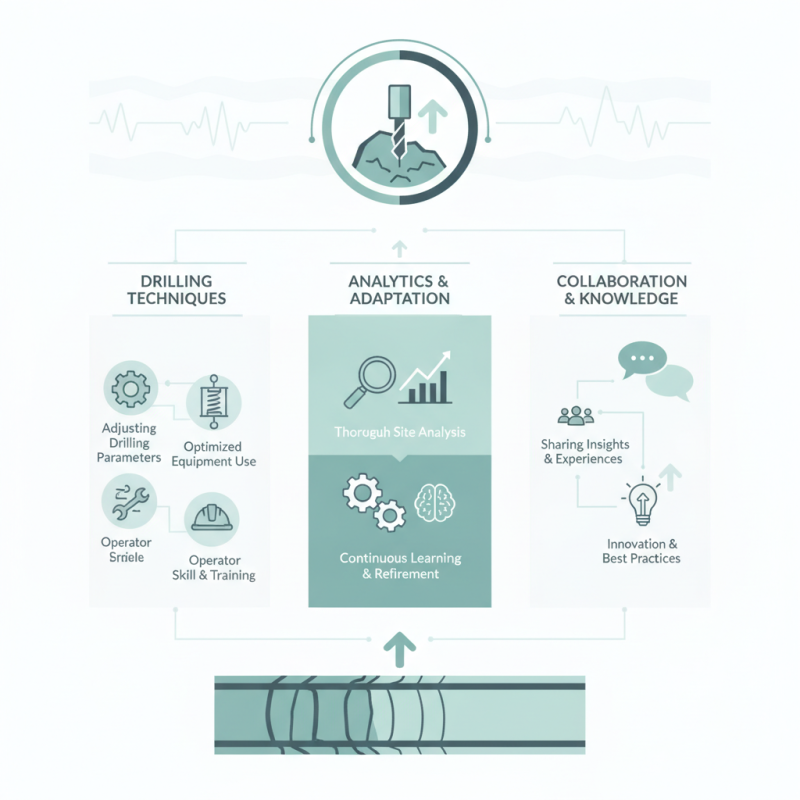
In practice, real-world applications of these strategies can sometimes fall short. It’s vital to conduct thorough analyses of drilling conditions. Continuous learning and adaptation are necessary in this field. Identifying and addressing potential pitfalls can help refine these techniques further. By sharing insights and experiences, we can collectively enhance our approaches to achieving better core recovery in hard rock drilling.
Core recovery rates in hard rock drilling are influenced by several key factors. Understanding geology is essential. Different rock types have varying hardness and fracture patterns. For instance, quartz-rich rocks typically yield lower recovery rates compared to softer sedimentary formations. Studies indicate that recovery can vary from 40% to 90%. Geological surveys help identify these variances, making exploration more efficient.
Drilling parameters also play a crucial role. The choice of bit type, rotation speed, and weight on bit significantly impact core recovery. Reports suggest that adjusting the weight on bit can increase recovery by up to 25%. Furthermore, mud properties cannot be overlooked. Poor mud circulation can hinder chip removal, leading to core loss. Aiming for optimal mud viscosity and density is vital for maintaining recovery rates.
Experience in field applications aids in improving outcomes. Not all drilling teams can effectively match techniques to specific conditions. Continuous training is crucial for practicing geologists and drill operators. Regular assessments of core samples ensure that best practices are refined. Implementing these insights can enhance recovery rates and provide more reliable geological information for future drilling projects.
In hard rock drilling, optimized core recovery rates are critical for successful exploration and resource assessment. Innovative techniques can significantly enhance recovery, with studies indicating that advanced methods can improve core recovery by up to 98%. This statistic highlights the need for continual improvement in drilling practices.
Adopting hydraulic drilling systems is one such method. These systems manage the pressure and flow of drilling fluid, reducing core fragment loss. According to a report by the Society for Mining, Metallurgy & Exploration, integrating directional drilling techniques can also enhance recovery rates. By precisely steering the drill bit, operators can access more optimal geological formations and collect larger core samples.
**Tip:** Regularly calibrate drilling equipment. This ensures maximum efficiency and precision during operations.
Another practice to consider is the use of core barrel designs that minimize disturbance. Industry reports suggest that using a triple-tube core barrel can significantly reduce core loss. While these innovations show promise, challenges remain. Operators must invest in training and technology updates to fully exploit these advancements.
**Tip:** Focus on staff training. An educated team is vital for implementing new technologies effectively.
| Drilling Technique | Average Core Recovery Rate (%) | Depth Range (m) | Advantages |
|---|---|---|---|
| Conventional Diamond Drilling | 85 | 0 - 1000 | High precision, excellent for geological analysis |
| Reverse Circulation Drilling | 80 | 0 - 600 | Fast drilling speed, efficient sample collection |
| Wireline Coring | 90 | 0 - 1500 | Minimized core loss, suitable for deep drilling |
| Percussive Drilling | 75 | 0 - 800 | Good for hard rock; low equipment cost |
| Auger Drilling | 70 | 0 - 300 | Cost-effective; quick setup for shallow depths |
The quality of core sampling in hard rock drilling heavily depends on the drilling equipment used. Advanced machinery, like rotary drills, can significantly boost core recovery rates. High-quality drill bits and proper casing techniques are essential. A well-chosen drill bit can make a considerable difference in core integrity. However, not all operations prioritize equipment selection, leading to compromised sample quality.
Tips for improving core sampling include regular maintenance of drilling equipment. Neglecting machinery can result in unexpected failures. Proper training for operators ensures they understand how to maximize recovery potential. Operators should also regularly assess the drilling rig's performance.
Another critical aspect is the environmental conditions during drilling. Factors like rock hardness and moisture levels can affect results. Maintaining consistent drilling parameters can mitigate these issues. Monitoring these conditions allows for real-time adjustments, ultimately enhancing core recovery rates.
Core recovery in hard rock drilling is crucial for geoscience and mining industries. Proper core handling and preservation can significantly enhance recovery rates. According to a report by the Society for Mining, Metallurgy & Exploration, maintaining core integrity during extraction can boost recovery by up to 25%. Even small improvements can lead to substantial data gains.
Core should be retrieved quickly and handled with care. Use a consistent method to label and store cores. Improper handling can cause fractures or contamination. This may result in unreliable data. It's essential to use designated core boxes that protect from environmental factors.
**Tips**: Always transport cores vertically and avoid excessive movement. Record the temperature and humidity during storage, as they can affect core quality.
The preservation process doesn’t just stop at storage. Cores should remain moist, using water or foam to keep them hydrated. Dry cores are more susceptible to damage, leading to inaccurate results. According to drilling experts, core integrity hinges on careful post-extraction methods.
**Tip**: Regularly monitor stored cores for cracks or signs of drying. Implementing these practices helps mitigate risks and ensures valuable geological information is preserved.
In hard rock drilling, geological conditions play a critical role in core recovery rates. Studies show that optimal recovery can be achieved by understanding the rock formations in advance. For instance, varying rock hardness directly impacts drill bit wear and core quality. Cores extracted from well-mapped geological sites can show a 30% improvement in recovery compared to poorly analyzed fields.
Analyzing geological conditions involves assessing fracturing, moisture content, and mineral composition. These factors influence drilling dynamics and affect core integrity. The Society for Mining, Metallurgy & Exploration notes that an estimated 15% of core recovery is lost due to inadequate geological data. Thus, investing in thorough pre-drilling surveys can mitigate costs and enhance output.
The choice of drilling techniques must align with the geological profile. Soft rock may permit faster drilling speeds, yet harder strata require more robust approaches. Inadequate adaptation can lead to poor recovery and wasted resources. Acknowledging the need for flexibility in drilling plans fosters better alignment with geological realities.
: Core recovery rates are crucial for exploration and resource assessment. Higher rates lead to better data.
Hydraulic systems manage pressure and fluid flow, reducing core fragment loss and enhancing recovery significantly.
Directional drilling involves steering the drill bit to access better geological formations, collecting larger core samples.
Using a triple-tube core barrel minimizes disturbance and significantly reduces core loss during drilling.
Regular calibration and maintenance of drilling machinery are necessary for maximum efficiency and precision.
Educated operators are vital for effectively implementing new technologies, enhancing overall drilling performance.
Factors like rock hardness and moisture can impact results, making consistent monitoring essential.
Neglecting equipment quality and maintenance can lead to equipment failures and compromised sample integrity.
Regular assessments of drill bits are essential to ensure they maintain core integrity and performance.
Yes, monitoring conditions and maintaining consistent parameters help address challenges in real-time, improving recovery.
Improving core recovery rates in hard rock drilling is crucial for obtaining quality geological samples. Key factors influencing core recovery include the selection of appropriate drilling techniques and the analysis of geological conditions. Innovative methods, such as using advanced drilling technologies, can significantly enhance core recovery. Additionally, the role of high-quality drilling equipment cannot be understated, as it directly impacts sampling accuracy.
Best practices for core handling and preservation during drilling further contribute to better recovery outcomes. By implementing systematic approaches to manage core samples, including proper storage and transportation, drilling teams can ensure the integrity of the samples collected. Ultimately, understanding how to improve core recovery rates in hard rock involves a holistic approach that integrates technology, equipment, and effective handling strategies.

Savvy Tools