Choosing the best drill bit in 2026 starts with the formation, not the marketing label. PDC and roller cone bits behave differently under changing pressure, temperature, abrasiveness, and vibration. A bit that performs well in soft shale may struggle in fractured limestone. Field results can change within a few meters.
This guide explains how to choose between PDC and roller cone bits using practical drilling evidence. It considers rock strength, compressive failure, weight on bit, rotary speed, hydraulic cleaning, and expected footage. PDC bits often deliver fast penetration in homogeneous formations with suitable hydraulics. Roller cone bits can offer dependable cutting action in interbedded, abrasive, or impact-sensitive rock. That is not a universal rule.
Real decisions also involve bit life, trip time, torque control, and total cost per meter. A cheaper bit may become expensive after repeated trips. An advanced bit may also disappoint when operating parameters are poorly matched. Small details matter, including cutter exposure, cone bearing condition, nozzle selection, and gauge wear.
Experienced drilling teams should compare offset wells, dull grades, vibration records, and actual penetration trends. Manufacturer data helps, but it should not replace local evidence. Some assumptions will be wrong. That is normal, and reviewing them can improve the next selection. This article offers a clear framework for comparing both designs and choosing a bit that matches the rock, rig, and drilling objective.
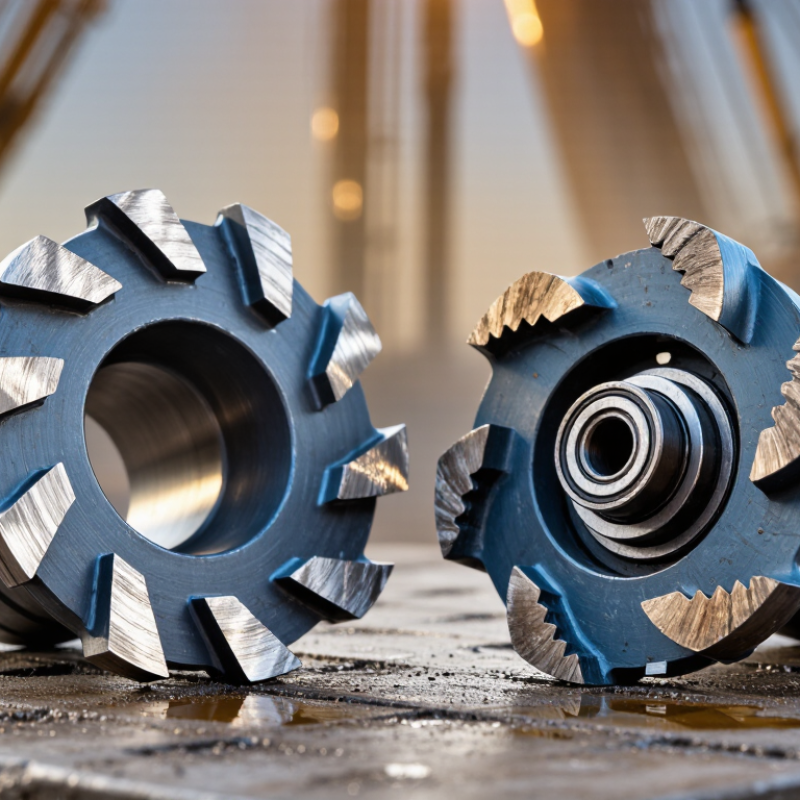
2026 Best PDC or Roller Cone Bits: How to Choose?
Formation strength should guide the first decision. The International Society for Rock Mechanics classifies intact rock above 250 MPa UCS as extremely strong. Soft formations below 25 MPa usually allow efficient PDC cutting, provided the rock is not highly abrasive. Medium-strength sandstone, limestone, and shale often support PDC performance with stable weight on bit and controlled rotary speed. Hard, fractured intervals may favor roller cone designs because their teeth tolerate impact and changing contact conditions better. The IADC Drilling Manual stresses that bit selection must consider lithology, strength, drilling parameters, and vibration together.
Abrasivity can change the answer. Cerchar Abrasivity Index guidance commonly describes values above 4 as extremely abrasive. Quartz-rich sandstone can rapidly wear fixed cutters, even when UCS looks moderate. In those intervals, a roller cone bit may deliver more predictable footage, though the trade-off is possible bearing wear and lower instantaneous ROP. Field reports published through SPE show that rising vibration and cutter wear often reduce ROP before the bit appears visibly damaged. Watch the dull condition carefully.
Do not trust UCS alone. That was my mistake on one mixed shale section. Review core photos, gamma-ray data, UCS, CAI, bit records, and torque trends. A short pilot run can expose poor assumptions before a full BHA is committed.
2026 Best PDC or Roller Cone Bits: How to Choose?
In 5–30 ksi formations, bit choice starts with rock behavior, not marketing labels. SPE/IADC case-study datasets commonly report PDC bits delivering 20–40% higher penetration rates in uniform, low-abrasion intervals. Their advantage comes from continuous shearing. Cutter layouts matter: 13–19 mm cutters, tighter spacing, and increased back rake can reduce torque spikes. However, dense layouts may slow cutting in softer rock. That trade-off is easy to overlook.
Roller cone bits attack the formation through crushing and impact. Their rolling elements tolerate interrupted cutting better. API RP 7G-2 and IADC dull-grade guidance emphasize bearing condition, tooth wear, and seal damage during evaluation. In field reports, bearing-related failures often become the limiting factor above roughly 15–20 ksi, especially with high vibration. Yet roller cones can remain practical in fractured, interbedded sections where PDC cutters chip quickly.
The neat cutoff is misleading. A 10 ksi shale may drill smoothly with PDC, while a 10 ksi sandstone can destroy cutters through abrasion. I would compare UCS, abrasivity, vibration, and expected footage before selecting the bit. Check offset runs, torque trends, and dull photos. Small layout changes matter. Some published case histories show impressive ROP gains, but they often exclude connection time and replacement delays. That weakens direct comparisons. A sound choice uses both the report and the rock.
Choosing between PDC and roller cone bits begins with formation behavior, not bit appearance. PDC bits often suit homogeneous, abrasive formations with stable drilling conditions. Roller cone bits can respond better to interbedded rock, vibration, and changing compressive strength. I have seen a fast PDC run lose efficiency after a thin hard streak appeared. The original selection looked correct on paper.
Set weight on bit, revolutions per minute, and torque inside proven operating windows. These limits should come from offset records, laboratory testing, and current rig capability. Begin near the lower WOB range, then increase gradually while tracking rate of penetration, torque, vibration, and pressure. Do not chase penetration alone. A sudden torque rise may indicate cutter damage, balling, poor cleaning, or excessive weight.
RPM needs equal attention. Higher speed can improve cutting action, but it may also increase thermal stress and lateral vibration. Keep torque changes smooth. A stable surface response is usually more valuable than a short-lived drilling peak. Inspect cuttings frequently; their size, shape, and dryness reveal cleaning problems. Field data is never perfect. Sensor delays, worn pumps, and changing mud properties can distort decisions. That is why I compare real-time trends with daily dull grading and post-run records. Sometimes the correct choice is less obvious than expected.cuntegn
Select weight on bit (WOB), rotary speed (RPM), and torque within a proven operating window. The chart shows typical starting envelopes for an 8.5-inch bit in moderate formations; actual limits must be confirmed against bit size, formation strength, hydraulics, vibration, and rig capability.
PDC bits generally use higher RPM and lower-to-moderate WOB, while roller cone bits typically use lower RPM and higher WOB. Torque should remain below the rig, drive-system, and bit connection limits while maintaining stable drilling response.
Choosing a 2026 drilling bit starts with the formation, not the catalog. PDC bits suit homogeneous, abrasive formations where steady cutting and high ROP matter. Roller cone bits handle fractured, interbedded, or variable formations with controlled crushing action. IADC codes provide a shared language for structure, cutter type, and formation range. Read every section carefully. A code can guide selection, but it cannot replace offset-well evidence.
For PDC selection, compare cutter size, blade count, torque response, and expected wear. High ROP may look attractive, yet excessive torque can damage cutters or destabilize the bottomhole assembly. Roller cone reviews should include tooth or insert condition, bearing design, seal reliability, and gauge protection. Track bit life in drilled meters, hours, and cost per meter. A long run is not always efficient. A slower bit may create fewer trips in a fragile interval.
Failure risk changes with application. In shale, vibration and balling can reduce PDC performance. In hard limestone, cutter impact and thermal damage deserve close monitoring. In unconsolidated zones, roller cone sealing and gauge loss can become serious concerns. Use MSE, drilling parameters, dull grading, and post-run photographs to challenge assumptions. I have seen teams overvalue initial ROP and ignore rising torque. That mistake was expensive. Predictions remain imperfect because geology shifts within one interval. Select the bit that matches the risk you can manage, then revise the choice after real-time data arrives.
| Application / Formation | Preferred Bit Type | Typical IADC Classification | Indicative Rock Strength | Typical Operating Window | Indicative ROP | Expected Bit Life | Main Failure Risks | Selection Recommendation |
|---|---|---|---|---|---|---|---|---|
| Soft unconsolidated sand, clay, and marl | PDC | PDC fixed-cutter classification; select a low-to-medium aggressiveness design with large fluid passages | Approximately 5–35 MPa UCS | WOB: 2–8 klbf; rotary speed: 120–250 rpm | 25–90 ft/h, depending on hole size, hydraulics, and formation mixing | Approximately 1,000–5,000 ft in stable drilling conditions | Bit balling, cutter impact damage from stringers, differential sticking, poor cleaning | Use a PDC when high penetration and efficient cuttings evacuation are more important than extreme impact resistance. |
| Medium sandstone, limestone, and interbedded shale | PDC | PDC fixed-cutter classification; medium aggressiveness and moderate cutter density | Approximately 35–90 MPa UCS | WOB: 4–14 klbf; rotary speed: 100–220 rpm | 15–60 ft/h | Approximately 2,000–8,000 ft | Cutter wear, impact damage at formation transitions, vibration, torque fluctuations | PDC is generally the first choice when the interval is reasonably homogeneous and vibration can be controlled. |
| Hard limestone, dolomite, and abrasive sandstone | PDC or hybrid bit | PDC with high cutter density and enhanced abrasion resistance; hybrid design where impact loading is severe | Approximately 90–180 MPa UCS | WOB: 8–22 klbf; rotary speed: 70–180 rpm | 8–35 ft/h | Approximately 1,000–5,000 ft; shorter in highly abrasive intervals | Thermal wear, cutter delamination, lateral vibration, torque spikes, nozzle erosion | Choose a high-density PDC for abrasive but stable rock; consider a hybrid when hard stringers and impact are frequent. |
| Very hard, highly interbedded, or fractured formation | Roller cone or hybrid | IADC 4- or 5-series roller cone for hard formations; final selection depends on tooth type and bearing design | Approximately 120–250 MPa UCS | WOB: 10–30 klbf; rotary speed: 50–140 rpm | 3–20 ft/h | Approximately 500–3,000 ft | Bearing wear, seal failure, tooth breakage, cone lock, washout, vibration | Use a roller cone when impact toughness and formation adaptability outweigh the higher mechanical complexity. |
| Soft to medium formations with high impact sensitivity | Roller cone | IADC 1- or 2-series roller cone; milled-tooth or insert configuration selected by abrasiveness | Approximately 10–70 MPa UCS | WOB: 5–18 klbf; rotary speed: 80–180 rpm | 8–40 ft/h | Approximately 1,000–6,000 ft | Bit balling, tooth wear, bearing/seal degradation, gauge loss | A roller cone can be more forgiving than a PDC in unstable or mechanically mixed intervals. |
| Large-diameter surface or top-hole section | Roller cone | IADC 1- or 2-series for soft to medium formations; open-bearing designs may be used where drilling conditions permit | Approximately 5–60 MPa UCS | WOB: 8–35 klbf; rotary speed: 40–120 rpm | 5–30 ft/h | Approximately 500–4,000 ft | Junk damage, washout, cone retention problems, unstable hole conditions | Prioritize durable cutting structure, adequate junk-slot area, and reliable cuttings removal over maximum instantaneous ROP. |
| Directional or extended-reach drilling | PDC | PDC with steerable geometry, controlled aggressiveness, and vibration-resistant cutter layout | Approximately 20–120 MPa UCS | WOB: 3–16 klbf; rotary speed: 80–220 rpm | 10–50 ft/h | Approximately 1,500–7,000 ft | Stick-slip, whirl, cutter impact, excessive torque, poor directional response | Select a balanced PDC design that limits torque fluctuation and maintains predictable steerability. |
| High-temperature or severe drilling environment | Application-specific PDC or roller cone | Use a sealed-bearing roller cone or thermally stable PDC design rated for the planned temperature and fluid system | Formation-dependent | Use conservative WOB and rpm; maintain hydraulic and temperature limits specified for the bit design | Usually 5–30 ft/h | Highly variable; often reduced by thermal and sealing limits | Thermal cutter damage, lubricant degradation, seal failure, bearing overheating | Verify temperature, drilling-fluid compatibility, bearing rating, and cutter thermal stability before choosing by ROP alone. |
In 2026, PDC and roller cone selection should start with cost per foot, not bit price. Calculate it as total bit cost plus drilling cost, divided by footage drilled. Include trip time, connection time, and lost operating hours. SPE technical literature commonly places drilling at roughly 40–60% of total well cost. Small performance losses can become expensive quickly.
Hydraulics decides whether the cutter structure works efficiently. Compare flow rate, nozzle pressure drop, annular velocity, and equivalent circulating density. IADC drilling guidance recommends checking hole cleaning under actual mud properties, not only pump capacity. A bit drilling 1,000 feet at 40 feet per hour may outperform one drilling 1,300 feet at 25 feet per hour. The calculation is less impressive then. Formation abrasiveness, compressive strength, vibration, and torque response also matter. Field records often expose assumptions that laboratory tests miss.
Tips: Build a simple offset-well table before final selection. Record footage, hours, dull condition, flow rate, pressure, and cost per foot. Use PDC bits in consistent, abrasive formations when steerability and long runs matter. Consider roller cones where impact resistance and changing lithology dominate. Leave room for judgment. A clean spreadsheet cannot replace a dull-bit inspection or a driller’s experience. Recheck hydraulics after every mud-weight or nozzle change. Small pressure changes can alter cleaning, cooling, and cutter wear.
Choose it for uniform rock and stable drilling conditions. Continuous shearing can increase penetration rates by 20–40%. Stable torque and low abrasion support longer cutter life. Rock behavior decides.
It can suit fractured, interbedded, or rapidly changing formations. Rolling elements tolerate interrupted cutting and variable compressive strength. Bearing, seal, and tooth condition require close inspection. The choice is not always obvious.
Cutter size, spacing, blade count, and back rake change torque response. Cutters around 13–19 millimeters may suit specific formation conditions. Tighter spacing can reduce torque spikes. Dense layouts may cut soft rock less efficiently.
Keep weight, speed, and torque inside proven operating windows. Start near the lower weight range, then increase gradually. Monitor penetration rate, vibration, torque, and pressure together. Do not chase penetration alone.
It may signal cutter damage, balling, poor cleaning, or excessive weight. Lateral vibration and changing rock strength can create similar symptoms. Check cuttings, pressure trends, and surface response. Data can mislead.
Compare drilled meters, operating hours, penetration rate, and cost per meter. Include connection time, replacement delays, and trip duration. A slower bit may reduce trips in fragile intervals. High ROP is not everything.
Shale may create vibration and bit balling. Hard limestone can cause impact damage and thermal stress. Unconsolidated zones may increase sealing and gauge risks. Each interval creates different weaknesses.
Review torque trends, dull photographs, drilling parameters, and post-run records. Compare them with current rig capability and mud conditions. Sensor delays and worn equipment can distort conclusions. Recheck the decision after real-time data arrives.
Choosing the right drill bit in 2026 begins with understanding the formation. Evaluate unconfined compressive strength, rock type, interbedding, and abrasivity before deciding how to choose between PDC and roller cone bits. PDC bits are often effective in consistent, medium to hard formations where high penetration efficiency is desired, while roller cone bits may offer greater adaptability in fractured, variable, or impact-sensitive rock. Cutter layout, tooth or insert design, bearing type, and gauge protection should be matched to formations ranging from approximately 5 to 30 ksi.
A successful selection also depends on operating discipline. Set weight on bit, rotary speed, torque, and hydraulic flow within proven drilling windows to reduce vibration, cutter damage, bearing failure, and premature wear. Compare relevant IADC classifications, expected bit life, rate of penetration, and application-specific failure risks. Finally, evaluate total cost per foot rather than purchase price alone, including trip time, replacement frequency, energy use, and hydraulics. The best 2026 choice is the bit that delivers stable drilling performance, predictable durability, and the lowest overall cost for the planned interval.

Savvy Tools